How I Test, Verify and Update Everything on This Site
Most of what I publish here is a recommendation about something that costs money. You have no particular reason to trust a stranger on that, so this page sets out exactly how I arrive at what I write, where the numbers come from, what I will not do, and how I get paid.
It is deliberately specific. If a claim on this site is not supported by the process below, it should not be there, and you are welcome to hold me to it.
Who is writing this
I am Rahul Singh, a WordPress developer and performance engineer. I have worked with WordPress since 2017 and have delivered more than 700 WordPress and WooCommerce projects.
My day to day is Core Web Vitals, block based development, WooCommerce, database and backend optimisation, PHP, caching, CDN configuration and server tuning. That is the lens everything here is written through: I care whether a product holds up in production, not whether its marketing page is convincing.
This site runs on the stack I recommend. It is built on the WordPress block editor with Kadence Blocks and the Blocksy theme, behind Cloudflare, with FlyingPress for caching and Imagify for images. When I say a tool works, it is usually because it is working here.
You do not have to take any of that on trust. My work history, the roles and the dates are public on LinkedIn, and the client side of it, including the reviews people have left for the performance work I do, is public on Fiverr under fixwebvitals. Both profiles are linked from this site’s schema as well, so a search engine sees the same identity you do. If anything I claim about my experience here does not line up with those two profiles, I would rather you tell me than quietly stop reading.

What I test, and what I do not
| I test and write about this | I do not |
|---|---|
| WordPress themes and block plugins, installed and used on real sites | Products in categories I have never shipped |
| Hosting, measured from multiple locations with public tools | Hosting I have not run a real site on |
| Page speed, Core Web Vitals, caching and CDN configuration | Anything where the only evidence is a vendor’s own benchmark |
| Pricing and deal terms, read off the vendor’s live page | Prices repeated from another blog |
| Backup, SEO and conversion plugins I actually run | Round ups of 40 plugins I have never opened |
Where I have not used something myself, I say so in the article and describe what the claim is based on instead, usually the vendor’s own documentation or the plugin’s shipped code. That distinction matters and I try never to blur it.
How I verify pricing
Pricing is where this industry is least reliable, because it changes constantly and most articles never revisit it. Four rules:
- Every price comes from the vendor’s own pricing page, never from another article, and never from memory
- Every price carries the date it was checked, in the article, in writing. If you are reading a table here, the date it was verified is next to it
- I record the renewal price, not just the intro price. An introductory price that triples in year two is the single most common thing deal articles leave out
- I read pricing tables off the rendered page, not a text dump. This one sounds pedantic and is not
Why that last rule exists
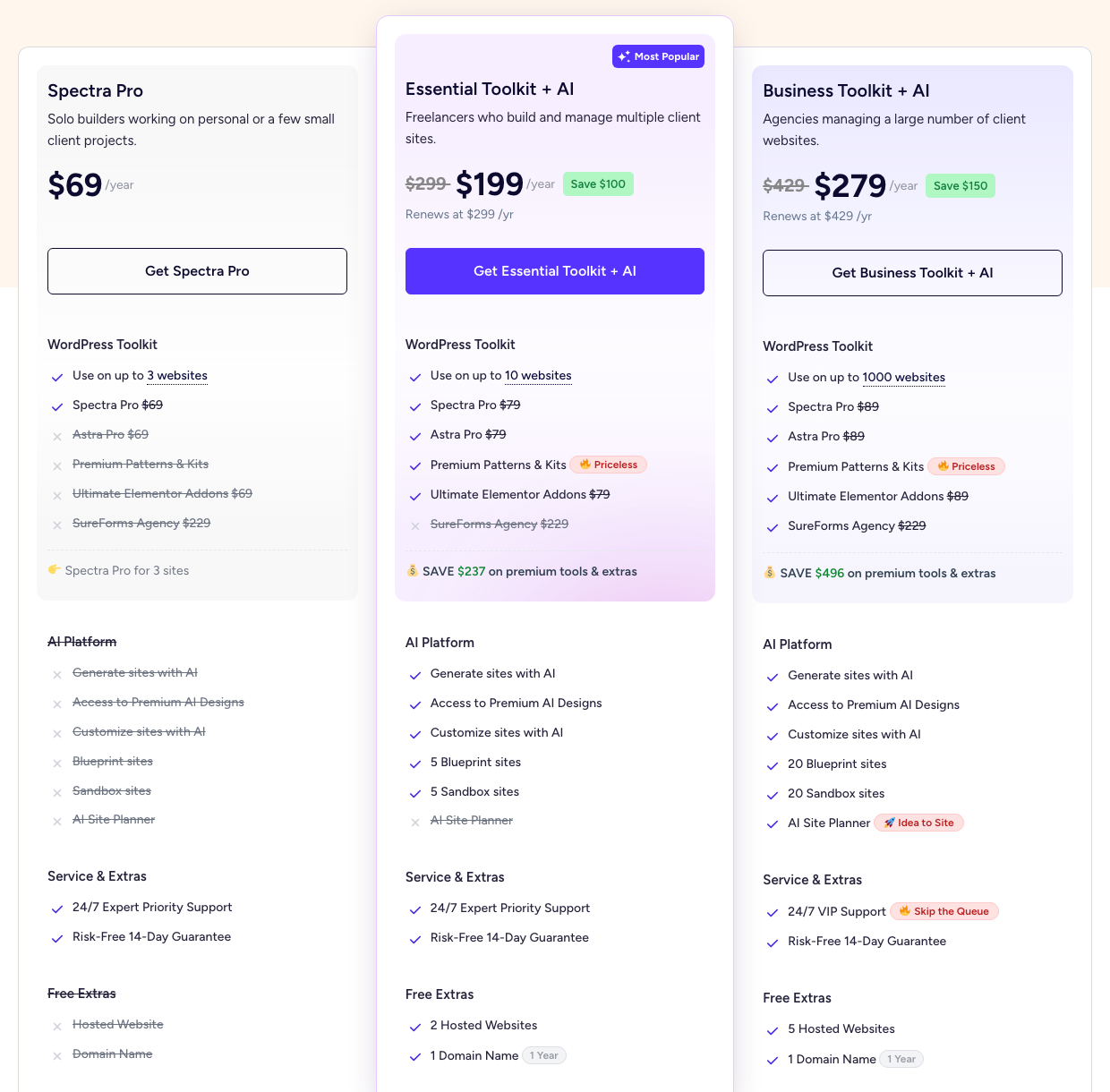
Vendors mark excluded features with a strikethrough and a cross icon. Copy the text of the page and those visual cues vanish, so every tier reads as though it includes everything. I nearly published exactly that error twice.
The screenshot below is the example that taught me. The 69 dollar tier looks fully loaded until you look properly: every single row in the AI section is struck through, so the cheapest paid plan includes no AI at all. That is the difference between a useful recommendation and a misleading one.
Where the plugin and theme numbers come from
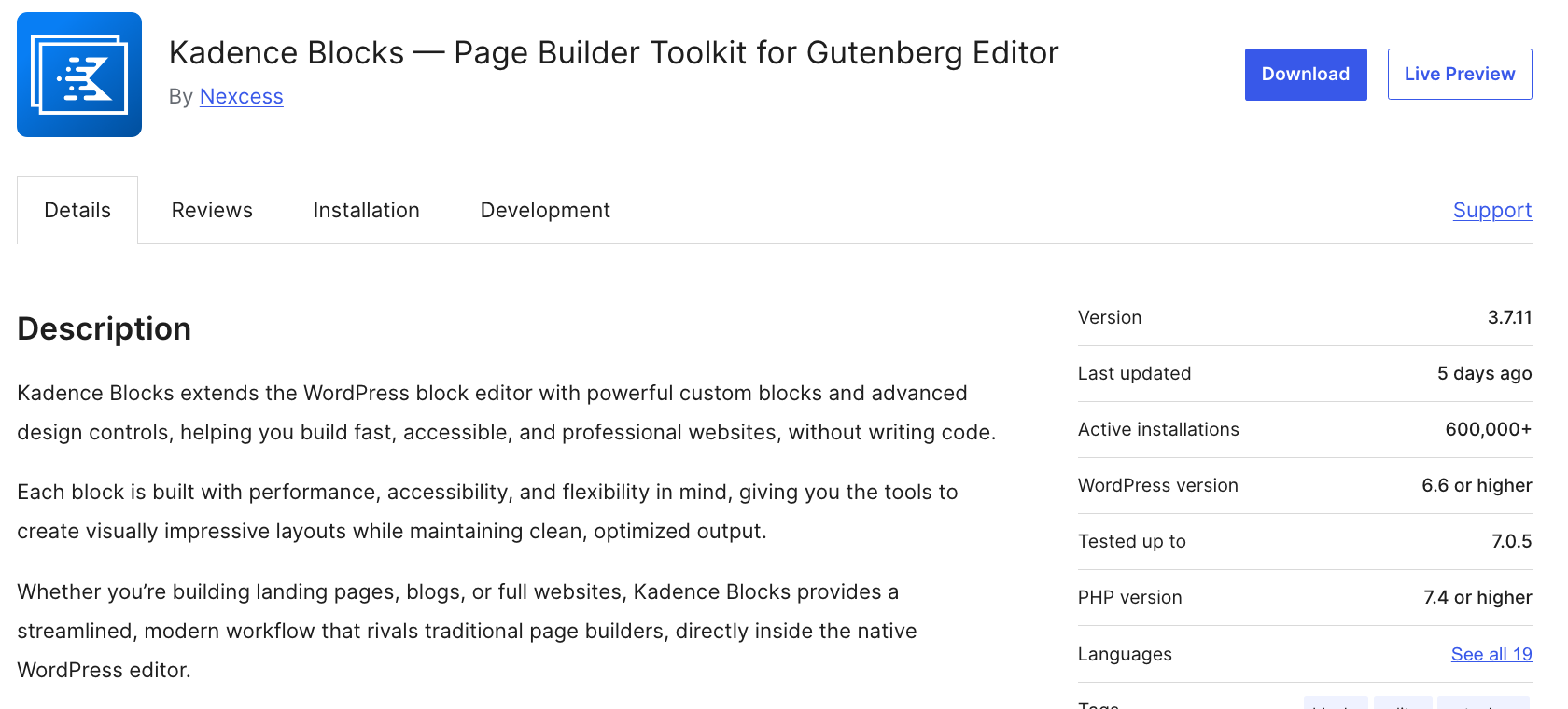
Install counts, ratings, version numbers, release dates and minimum PHP requirements all come from the official WordPress.org plugin directory and its public API, not from vendor marketing. Neither the vendor nor I control those numbers, which is exactly why they are worth quoting.
Where the question is “which came first”, I use the WordPress.org version control repository, which lists every published release with its date. That settles origin arguments with evidence instead of opinion.
When a claim depends on what a plugin actually does, I read its shipped code. Block counts on this site, for example, are counted from every block.json file in the plugin, split into blocks you can insert and child blocks that only exist inside a parent. That is why my counts sometimes disagree with the vendor’s own marketing.
How I test hosting performance
Hosting reviews are worthless without numbers, and numbers are worthless without a stated method. Mine is deliberately boring and reproducible.
- Identical test sites. Same theme, same content, same plugins, so the only variable is the host
- GTmetrix for a controlled single location run, reported as grade, performance score, largest contentful paint and time to first byte
- Fast or Slow for a multi location run, because a host that is quick from one city and slow from twelve others is not actually a quick host
- Core Web Vitals as the yardstick, since those are the metrics Google actually uses
- Screenshots of every result, published in the article, so you can check my reading of them
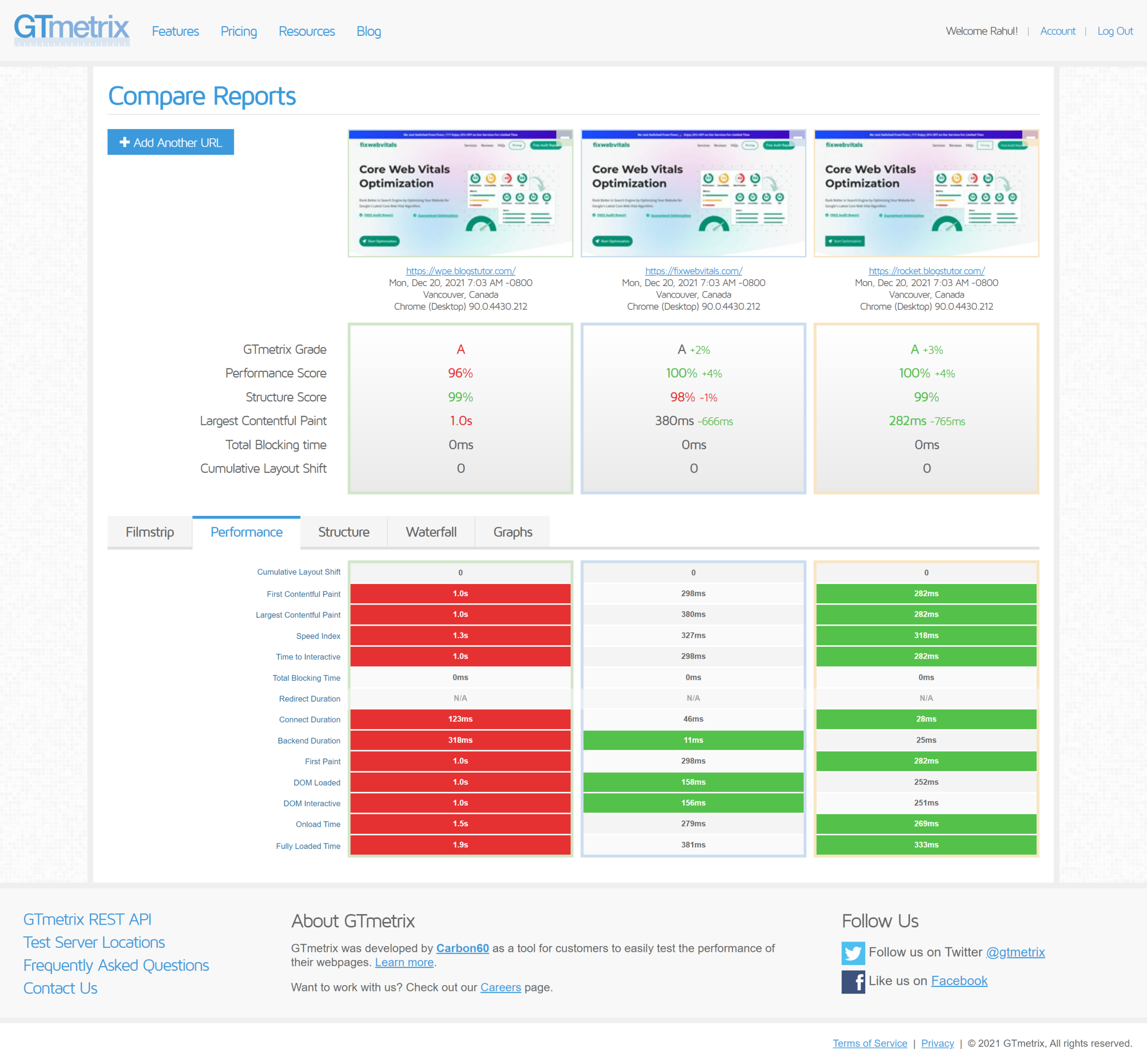
Here is what that produces in practice. This is a three way comparison of managed WordPress hosts on identical sites, and it is the reason I moved this site’s own hosting after running it.
| Host | GTmetrix performance | Largest contentful paint | Time to first byte |
|---|---|---|---|
| Rocket.net | 100% | 282 ms | 53 ms |
| Cloudways | 100% | 380 ms | 57 ms |
| WP Engine | 96% | 1.0 s | 441 ms |
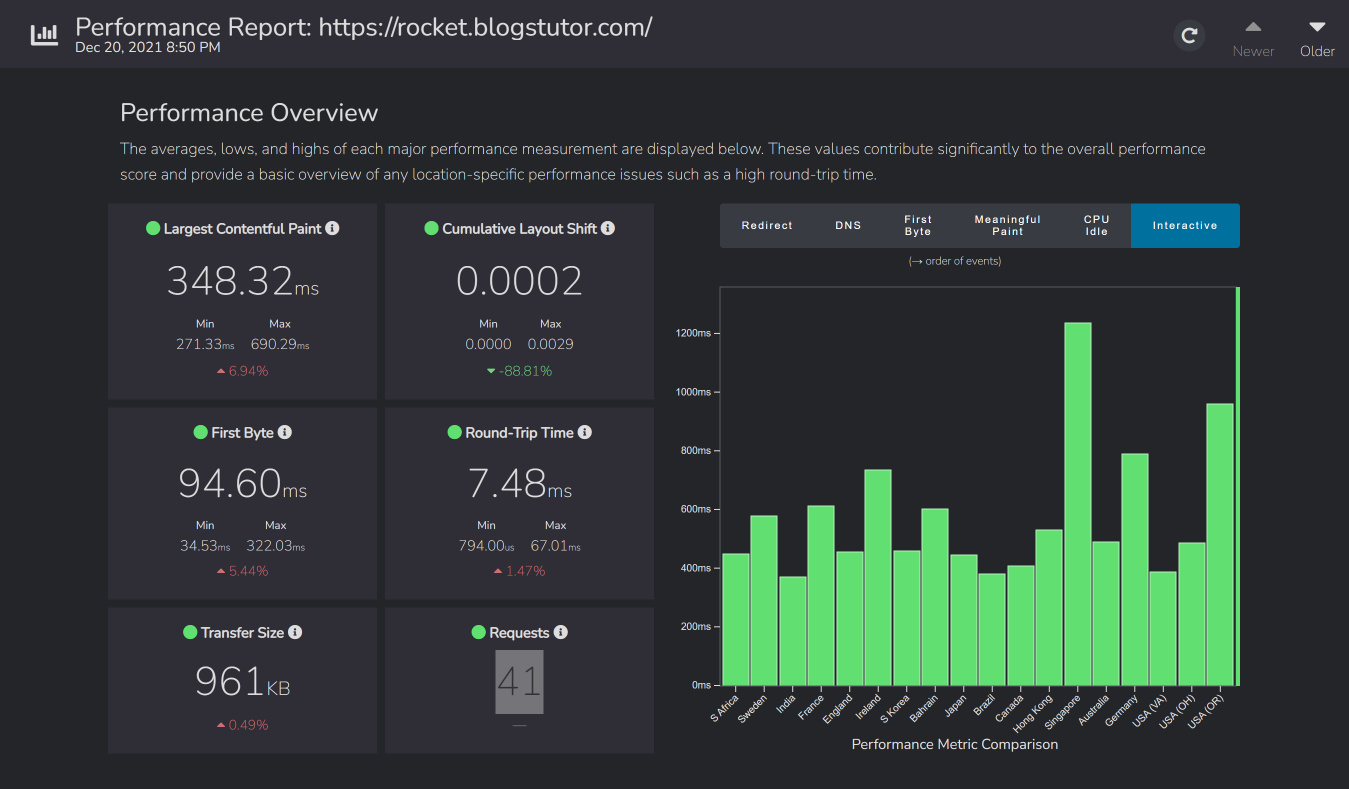
The single location run is only half the story, which is the point of the second tool. Across the multi location test the same host held a 348.32 millisecond largest contentful paint and a 94.60 millisecond first byte with every test location scoring green, while a competitor that looked close on the single run turned amber in several regions.
How I handle deals, coupons and sale claims
Deal pages are the most abused format in this industry. Most of them advertise a sale that ended years ago because nobody went back to check. I have been guilty of that myself, and fixing it is an ongoing job here.
- A deal page states today’s status first. If no discount is running, it says so at the top, with the date
- Expired sales move into a dated archive, clearly labelled as history, so you can judge what is likely to come back without being told it is live
- No countdown timers that reset. No invented urgency of any kind
- No made up star ratings. If I quote a rating it comes from a named public source with the sample size attached
- Arithmetic is labelled as arithmetic. If I say “that would be X at 40% off if last year’s discount repeats”, the page says plainly that this is a projection and not an announced price
- Dead links get fixed, not hidden. If a vendor kills a page, the article says the page is dead rather than quietly linking somewhere else
A worked example
One brand I cover was acquired, restructured its pricing, and retired the lifetime licence that carried its biggest discount. Both of its old sale URLs now redirect to a generic pricing page.
The honest version of that article says all three of those things, shows the vendor’s own archived terms from the year they were last published, and tells you that any “40% off” figure is a percentage of a catalogue that no longer exists. The dishonest version just repeats the 40%.
How I get paid, and what it does not buy
This site earns through affiliate commissions and advertising. If you buy through a link here I may earn a commission, at no extra cost to you. That is disclosed on every article that contains one, and in full on the affiliate disclosure page, in line with the FTC endorsement guidelines.
| What the commission does | What it does not do |
|---|---|
| Pays for hosting, tools and the time to test things properly | Change which product wins a comparison |
| Costs you nothing extra, the price is identical either way | Buy a place in a round up. There is no paid placement here |
| Is disclosed on every page that carries a link | Stop me saying a product I earn on is the wrong choice for you |
In practice I usually earn on both sides of a comparison, which is the most honest position to be in, and I say so in the article when it is true. On several pages the option I recommend to most readers is the free one, which earns me nothing at all. If you ever find a recommendation here that only makes sense as a commission, tell me and I will fix it.
How often this gets updated, and how you can tell
- Every article carries the date its facts were verified, in the body text, not just a modified timestamp
- Pricing is re-checked whenever an article is touched, and the table carries the date it was checked
- Year numbers only appear in a title when the content genuinely reflects that year. Stripping a stale year is not the same as refreshing an article, and I no longer do the former and pretend it is the latter
- Structured data is checked alongside the content. A page can look current and still be telling Google about a sale that ended in 2020
- Articles that no longer deserve to rank get de-indexed or merged rather than left to rot
Corrections
I get things wrong. When I do, I correct the article itself rather than quietly deleting the claim, and if the error changed a recommendation I say what changed.
If you spot an error, an out of date price, or a dead link, please tell me through the contact page. Corrections from readers are the cheapest quality control I have and I would rather have them than not.
For the wider principles this site tries to follow on helpful, people first content, Google’s own creating helpful content documentation is the reference I hold myself to.
Questions about how this site works
Do you accept paid reviews or sponsored placements?
No. There is no paid placement anywhere on this site and no vendor has ever been able to buy a position in a comparison. The site earns through affiliate commissions and advertising, both of which are disclosed, and neither of which changes which product wins a recommendation.
Do you actually use the products you recommend?
For most of them, yes, and this site runs on the stack I recommend: the WordPress block editor with Kadence Blocks, the Blocksy theme, Cloudflare, FlyingPress and Imagify. Where I have not used something personally I say so in the article and explain what the assessment is based on instead, usually the vendor’s documentation or the product’s shipped code.
Where do your install counts and ratings come from?
The official WordPress.org plugin and theme directories and their public API. That covers active installs, star distribution, version numbers, last updated dates and minimum PHP requirements. For release history I use the WordPress.org version control repository, which lists every published version with its date.
How do you test hosting speed?
Identical test sites on each host, so the only variable is the host itself, measured with GTmetrix for a controlled single location run and Fast or Slow for a multi location run. I report grade, performance score, largest contentful paint and time to first byte, and publish screenshots of every result so you can check my reading of them. A host that is fast from one city and slow from twelve others is not a fast host.
Why do your block or feature counts differ from the vendor’s?
Because I count them from the plugin’s shipped code rather than its marketing page, and I separate blocks you can actually insert from child blocks that only exist inside a parent. Counting the children inflates a total without giving you anything you can place on a page. Where my number differs from the vendor’s, the article explains how it was counted.
How current is the pricing on this site?
Every price carries the date it was checked, written into the article rather than left to a modified timestamp. Pricing is re-verified whenever an article is updated, and renewal prices are recorded alongside introductory prices because the gap between them is what most deal articles leave out.
Do you use AI to write these articles?
Every article here is written and reviewed under my name, and I am accountable for every claim in it. The research, the testing, the screenshots and the final judgement are mine. If a page says I tested something, I tested it.
What happens when a deal on your site expires?
It moves into a dated archive within the same article, clearly labelled as history, and the top of the page states today’s status instead. You should never land on a page here that implies a sale is running when it is not. Where that is still true of an older article, it is a bug I have not reached yet rather than a policy.
How do I report an error?
Through the contact page. Out of date prices, dead links and factual errors are all worth reporting, and I would much rather hear about them from you than leave them up. If a correction changes a recommendation, the article says what changed.
See the method in use
- The three way hosting performance test, with every GTmetrix and Fast or Slow report
- Kadence Blocks vs Spectra, block counts taken from the shipped code
- Gutenberg vs page builders, with the cost of leaving a builder measured on this site
- A deal page written the way deal pages should be: today’s status first, history second
- Kadence Blocks vs Elementor, a comparison where I earn on both sides
- The full affiliate disclosure